Serverless CMS: How a Siemens Carve-Out Achieved Digital Independence
As a global leader in industrial technology, Siemens has long been at the forefront of innovation across sectors like electrification, automation, and digitalization. When a newly formed business unit, emerging from a carve-out of a Siemens division, faced the challenge of establishing its independent operations, it turned to Groundfog to deliver an essential part of this process: A fully operational, independent marketing website.
A Groundfog Case Study
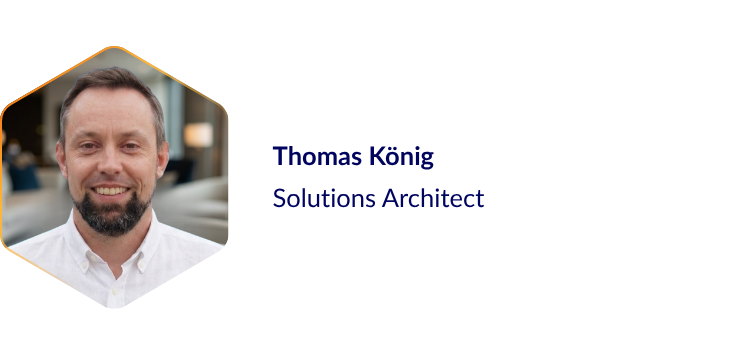
Senior Product Owner in Digital Communications at Siemens AG
Facing a demanding deadline of 3 & 3 months, the project pushed the limits of what was achievable in such a constrained
timeframe. Groundfog embraced the challenge, leveraging its expertise in supporting business transitions, assembling agile teams, and establishing a robust partner network, all while meeting the rigorous standards set by the new business unit.
Throughout the project, we ensured that the web solution was not only aligned with the evolving brand identity of our customer but also completely independent of Siemens' legacy systems.
Our agile methodology allowed us to work in parallel with the new business unit’s ongoing processes, ensuring that editorial operations continued seamlessly and without delays.
This ensured the new brand was able to establish itself quickly in the market without compromising time-to-market goals or quality.
By successfully meeting the customer’s ambitious deadlines, we demonstrated the power of rapid yet thoughtful digital transformation, helping to set the foundation for our customer’s independent future.
Why Groundfog?
#1
Successfully navigated the carve-out challenges within tight timeframes and hard deadlines.
#2
Established an independent domain for the new business entity, presenting the brand from day one.
#3
Implemented a lean, future-proof, and user-friendly system capable of scaling globally.
Groundfog’s long-standing trusted relationship with Siemens provided the new business unit with confidence in our expertise, making us their partner of choice for this critical carve-out.
Our proven agility and commitment to high quality, demonstrated in previous fast-paced projects, gave our new customer the assurance needed to rely on us during this important transition.
With unmatched expertise in CMS, the specified technology stack, and a profound understanding of the business needs, Groundfog ensured that the new business entity could hit the ground running.
Overcoming Challenges
In the process of carving out a key business division from Siemens, the project encountered a range of organizational and technical challenges, as well as the need for strategic partnerships.
Organizational Challenges
The customer, formed through a carve-out from Siemens, faced the complex challenge of establishing itself as an independent entity while managing numerous critical priorities. Among these was the creation of an independent marketing website, a key component in building its new identity. Adding to the complexity was a change in design agency, which introduced communication hurdles as the brand identity was still under development during the website’s implementation.
To navigate these challenges, the customer sought a trusted implementation partner capable of handling not only the technical execution but also future system rollouts, operations, and editor training. Groundfog was selected for this key role, due to its proven expertise in delivering high-quality solutions under demanding conditions. The overarching goal was to ensure a successful carve-out while laying the groundwork for long-term partnerships to drive the customer’s future marketing strategy.
Technical Challenges
Alongside organizational complexities, the customer faced numerous technical hurdles during its carve-out from Siemens. Ensuring that existing and potential future clients could seamlessly navigate the new entity’s products and services without confusion was a top priority. To support a smooth brand transition, Groundfog implemented URL redirects to effectively guide users to the new platform.
With the launch of a new brand, the customer was eager to monitor user and market reactions, prompting the early integration of website tracking. Additionally, the marketing team, which had worked on content for years, needed to prepare additional material for the carve-out. To streamline their efforts and minimize workflow disruptions, we implemented an automated content migration process and integrated critical external systems, such as their central digital asset management system.
As a trusted partner, Groundfog played a pivotal role in overcoming these technical challenges, ensuring a smooth and successful transition for the customer.
Project Milestones and Needs
The project was particularly demanding due to a compressed six-month timeline. With the carve-out publicly announced early in the process, there was significant urgency for the new business unit to be fully operational within this short window. The customer needed to establish itself as an independent company with a fully functional website that accurately reflected its emerging brand identity—all within just a few months.
By the end of the six-month period, the customer’s complete marketing website needed to be live, showcasing all products under the new brand design. This demanding timeframe required meticulous coordination and agile execution.
Groundfog rose to the challenge, successfully delivering the solution and meeting every critical milestone within the strict deadlines. To successfully implement the carve-out strategy, Siemens' newly independent business division required a seamless transition to a self-managed system.
The first goal was clear: we needed to deliver a robust CMS and a fully functioning website under the new brand design within a tight three-month timeframe. The subsequent three months focused on establishing a comprehensive, self-owned CMS that included all product pages, giving the customer full control over its digital presence.
Build a Future-Proof System
The limitations of the legacy system became evident during the transition. As a former Siemens department, the customer was tied to a solution that offered little flexibility, with the only alternative being a migration to a rigid SaaS setup.The existing authoring system incurred high costs and required significant effort to maintain.
To overcome these challenges, the customer sought a future-proof system that combined high performance and resilience with easy extensibility and cost-efficiency. Groundfog delivered a tailored solution that met these requirements, ensuring the customer could operate independently and efficiently for years to come.
Enhance Editing Experience
Another critical aspect of the project was enhancing the editing experience. After six years of custom development on the legacy system, there was an excess of features that no longer suited the needs of the newly independent organization. This required a thorough consolidation and clean-up effort. The newly established company needed a user-friendly, secure, and scalable solution capable of supporting globally distributed teams. It was essential to migrate existing content seamlessly into the new system while enabling efficient content maintenance with a smaller team and providing a straightforward onboarding process for new editors. Groundfog ensured that these requirements were met, delivering a streamlined and future-ready solution tailored to the needs of the emerging business.
Improve Product Vendor Collaboration
Finally, there was a clear need to improve collaboration with the product vendor. The legacy system had been hindered by slow, uncontrollable support and lengthy release cycles. The newly independent business unit required a reliable and responsive product vendor—one that would enable direct input into the product roadmap, ensuring a more agile and supportive long-term partnership.
As we worked closely with the emerging standalone company to define its needs and milestones, the formidable challenges of the carve-out strategy became evident. Groundfog, as the trusted partner, addressed these challenges by delivering a tailor-made solution that met the organization’s unique requirements and set the foundation for its independent success.
Groundfog’s Answer
To lead this project to success, we involved all important stakeholders and developed a plan to address the given needs, pain-points and challenges. A 3-phase roll-out plan had to be crafted early on, followed by a project approach and clear migration plan. Numerous alignments, requirement discussions, consulting and constant improvements paved the way to the following strategy: Embracing a "Start small, grow smart" philosophy, our project approach for the carve-out involved a strategic and collaborative effort.
Phase One: System Setup
Deliver the initial 5 marketing pages to present the brand and essential legal content.
Establish the full technology stack and integrate with existing systems as necessary.
Phase Two: Editor Enablement
Implement all critical features and complete the full web design.
Migrate all existing content, train editors, and deliver product pages in English to launch the core site.
Phase Three: Scaling
Extend functionality, e.g. by integrating additional systems as the new business grows.
Roll out the CMS to regional teams across the globe.
Automate translations and deliver product pages in multiple languages to support global operations.
Agile Scrum Team & Transparency
To address evolving requirements, we quickly established an agile Scrum team, working in two-week sprints with regular demos.
This iterative process enabled us to make timely adjustments to align with the evolving vision of the new business division. The resulting transparency helped build trust with all key stakeholders.
Established & Future-Proof Patterns
To overcome content migration and editor training challenges, we relied on established, future-proof patterns.
This approach minimized effort and ensured a seamless transition, aligning with the customer's goal of implementing a lean and efficient system for long-term use.
Scope Monitoring & Constant Feedback
We focused on foundational features from the outset, continuously monitoring the project scope.
This ensured that resources were concentrated on critical elements, streamlining development and allowing for dynamic adjustments through frequent feedback loops. This agile, feedback-driven approach helped maintain focus and efficiency.
Key Stakeholders & External Partners
Given the various challenges, we worked closely with a range of stakeholders and external partners. Siemens enterprise architects guided the technical strategy and roll-out. Marketing experts and headquarter content editors from the newly carved-out business defined the essential feature set. Two design agencies crafted the brand and website design, while the engineering team of Webiny provided instant support, fixes, and improvements for their CMS product.
Migration Plan
To support the editing team through the brand transition and maintain continuity, we implemented a clear migration plan.
Transition Phase
Continue using the legacy CMS for as long as feasible during the transition.
Training & Onboarding
Provide comprehensive training for the editing team on the new CMS.
Migration Phase
Execute a one-day automated content migration to minimize disruption.
Go-Live
Switch to the new CMS, allowing the team to resume editing seamlessly.
Technical Solution
Our technical strategy focused on building a serverless AWS stack, making it the ideal platform choice for scalability, cost efficiency, and resilience. To ensure flexibility, we selected a self-hosted, open-source, and serverless CMS, providing maximum customization while staying within budget constraints: Webiny.
We adopted an API-first approach, composing the CMS from lean services to enhance focus, interchangeability, and service reuse.
This approach extended to the system architecture, where we embraced the pattern of a composable Digital Experience Platform (DXP) pattern. This ensured clear system responsibilities and seamless integration with specialized external tools, tailored to meet the needs of the newly independent business division.
Leveraging existing Siemens services, we ensured a smooth migration and a strong foundation for the division’s marketing strategy, maximizing long-term impact and future growth.
Technology Stack & Architecture
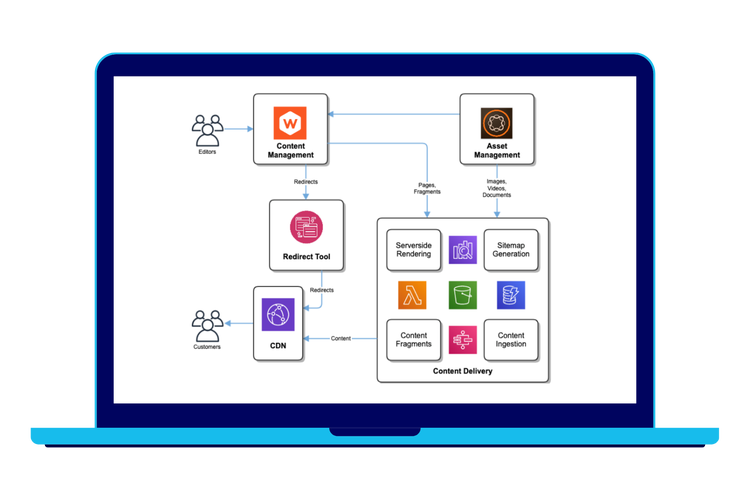


Based on the technical strategy and the needs of the customer, we selected a variety of technologies, products, and platforms, settling on the following stack and architecture:
Serverless AWS Services
We utilized a range of serverless AWS services, including S3, Lambda, DynamoDB, CloudFront, Step Functions, and SQS. The serverless approach allowed us to maintain detailed cost control while providing immense flexibility and scalability, essential for the project's success.
Webiny CMS
We chose Webiny as the enterprise CMS due to its open-source nature and clean extension points, which enabled maximum customization. As a self-hosted, serverless solution, Webiny allowed us to maintain full control over costs and scalability. Additionally, Webiny's openness to direct client feedback fostered a productive partnership, ensuring continuous improvements in the editing experience.
GraphQL
Adopting an API-first approach, we leveraged GraphQL for all the services we added to the ecosystem. Webiny's powerful GraphQL API played a key role in facilitating the automated content migration, enhancing the overall efficiency of the system.
Integration with Existing Systems
A number of existing systems were integrated to extend the capabilities of the Webiny CMS. Whether migrating these systems or integrating them directly, they included a central DAM for managing images, videos, and documents, a redirect tool, tracking and consent management, external JavaScript applications and forms, and a dedicated cloud-based edge delivery system.
In conclusion, our technical solution successfully merged strategic decisions with a robust technology stack that offered scalability, flexibility, and cost efficiency. The serverless AWS infrastructure and carefully selected CMS reflected our commitment to meeting the evolving needs of our customer. By focusing on clear system responsibilities and building strong partnerships—particularly with Webiny—we delivered a future-proof system that aligned perfectly with their marketing strategy.
Conclusion
Working together as a united team comprising the customer, Webiny as a strong partner, and Groundfog, we tackled significant challenges and successfully executed the carve-out strategy within the tight 6-month timeframe. Our combined efforts ensured a seamless transition, enabling the newly established company to confidently position itself in the digital landscape.
Choosing Webiny as the CMS solution allowed us to tailor the platform to the unique needs of the business, greatly enhancing the editing experience and giving the team full control over their digital presence. Through an agile mindset and maximal transparency we build trust between key stakeholders and laid the foundation for a long-term partnership to implement a cloud-based, digital marketing strategy.
Given the technical and architectural choices we setup a future-proof platform ready to integrate more systems and compose a full Digital Experience Platform (DXP) by adding functionality like:
- A/B testing
- Personalized content
- AI-powered Smart Services
- Semantic Search
- E-Commerce integration
By staying true to our commitment to innovation, Groundfog has created a future-proof, cloud-based marketing strategy for the customer’s carve out, equipping them with the tools needed to grow and adapt in the digital age.
Join us in shaping the future of digital marketing.
Let's start to shape your future-proofed digital marketing strategy.